 JOIN
JOIN MEMBERS
 C-TOW APP
 CAREERS
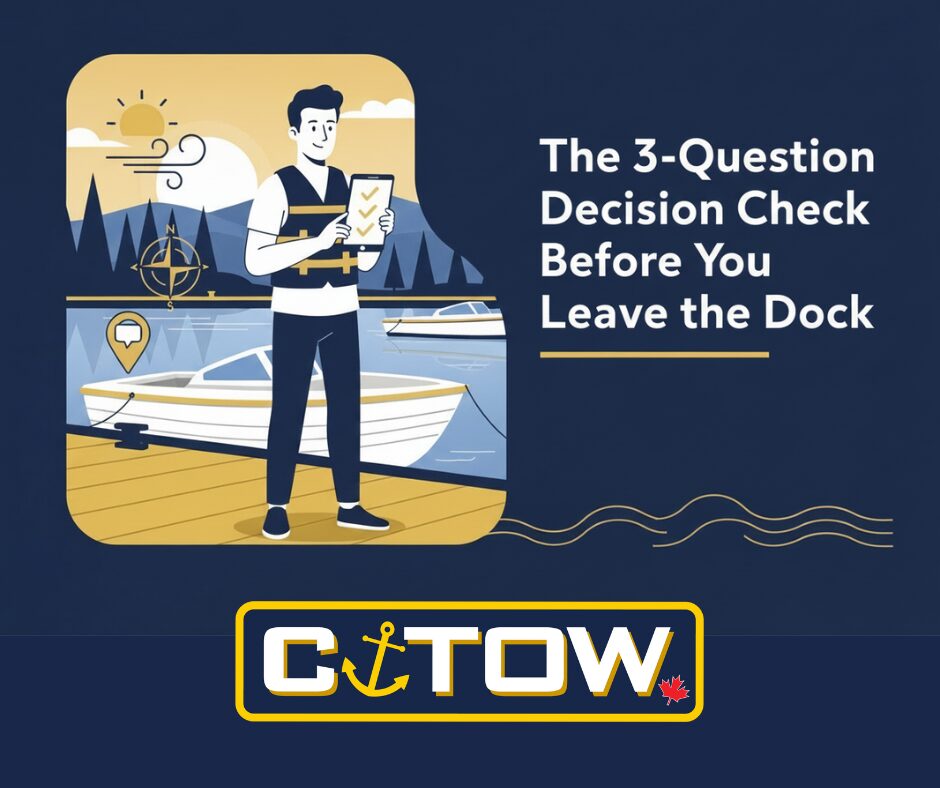
Most boating problems don’t start as emergencies — they start as “It’ll probably be fine.” A small issue, a tight timeline, a weather window you want to believe in. This quick, captain-approved check takes less than a minute, but it can prevent a long day (or a dangerous one).
1) If something fails, what’s my Plan B?
This isn’t about worst-case panic — it’s about having a realistic backup while you still have options.
Ask yourself:
- If the engine doesn’t start: Do I have enough battery power to troubleshoot? Do I have a second battery, booster pack, or a way to safely get back to the dock?
- If I lose steering or propulsion: Where is my safest “drift zone” nearby — open water, a protected bay, or an area clear of rocks and traffic?
- If visibility drops: Do I have a simple route back that I can follow confidently? (And do I have the tools to navigate it — chartplotter, phone, VHF, paper chart as a backup?)
- Is my C-Tow membership up to date?
Beyond the basics tip: Plan B should include how you’ll communicate. If your phone dies or loses signal, is your VHF ready and accessible?
2) What will conditions be when I’m coming home?
A lot of trouble starts when the outbound trip is smooth… and the return trip is not. Before you leave, think about the “later version” of today.
Common shifts to watch for:
- Wind and waves building later in the day (especially on big water)
- Temperature drops that increase fatigue and reduce dexterity
- Light fading faster than expected when plans run long
- The classic trap: “One more stop” becomes “one more risk”
Beyond the basics tip: Set a turnaround time before you go. If you’re not headed back by then, you adjust the plan — no debate, no bargaining.
3) Who knows where I am — and when I’m due back?
Even experienced boaters skip this because it feels “extra”… until it isn’t. A simple float plan is one of the highest-impact safety habits you can build.
At minimum, share:
- Where you’re launching from
- Your general route / destination
- Who’s onboard
- When you expect to be back (and when they should check in if they haven’t heard from you)
Beyond the basics tip: Make it easy for the person at home: “If you don’t hear from me by 6:30, call me. If you can’t reach me by 7:00, call for help.”
Member reminder
If you do run into trouble, don’t wait until it’s urgent. Calling early gives us more options and gets help moving faster — and it often prevents a small problem from turning into a bigger one.