 JOIN
JOIN MEMBERS
 C-TOW APP
 CAREERS
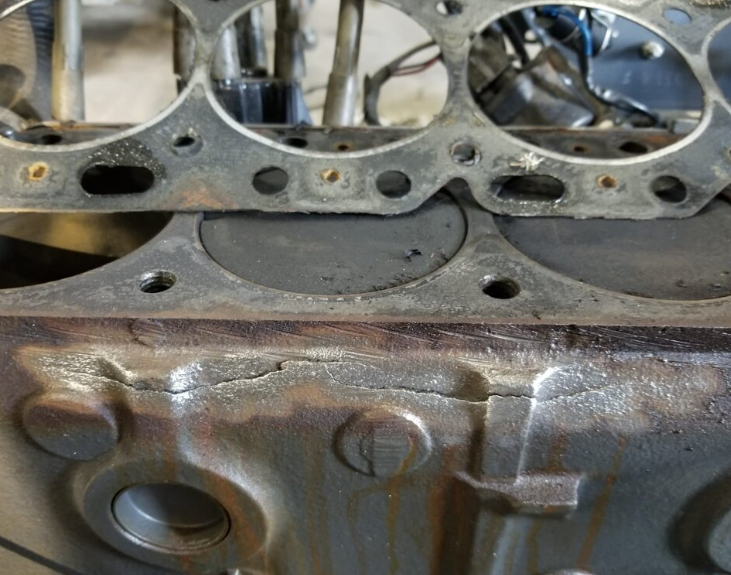
One Missed Step in October Can Mean a Destroyed Engine by May
Picture it: the first warm Saturday of the season. You’ve been counting down to this for months. You pull the cover, give the hull a once-over, and climb aboard with the energy of someone who has spent the entire winter planning where they’re going first. You turn the key.
Nothing. Or worse — something. A grinding, clanking, wet sound from below the engine hatch that tells you immediately this isn’t a dead battery situation.
You pull the hatch. There’s dried residue around the exhaust manifolds. A hairline crack in the block. Frost damage, the yard tells you later. Your engine block froze over winter. You’re looking at a replacement.
This scene plays out at marinas across Canada every spring — entirely preventable, almost always the result of the same mistake.
What Goes Wrong and Why
The culprit is water left in the engine’s cooling system. Inboard engines, sterndrive units, and even many outboards use raw-water cooling: water drawn in from the lake or ocean circulates through the engine to pull heat away, then gets expelled. When you haul out for the season, that water doesn’t drain itself. If you don’t flush and purge the system completely, pockets of water sit inside the block, in the exhaust manifolds, in the riser elbows, and in the heat exchanger — waiting.
In a Canadian winter, that water freezes. Water expands when it freezes. Metal doesn’t. The result is cracked manifolds, a cracked exhaust riser, a cracked block, or all three. The damage is internal, invisible until spring, and catastrophic in cost.
What People Get Wrong
The most common mistake is assuming the engine drains when you run it out of the water, or that a brief flush with a garden hose is enough. It isn’t. Water clings to the internal passages of the cooling system. Simply revving the engine dry doesn’t displace it. Partial flushes leave cold spots in the system that still hold enough water to crack.
Some boaters flush with fresh water but skip the antifreeze step entirely, assuming the fresh water will drain out over the season. It won’t. Not reliably. Not completely.
How to Do It Right
After your final run of the season:
- Flush the raw-water side with fresh water while the engine is running, using either a flushing attachment or a water supply connected to the intake.
- Once the engine is warm and flushed, switch your water supply to a bucket of non-toxic marine antifreeze (propylene glycol, not automotive antifreeze). Run the engine until you see pink fluid coming out of the exhaust — this confirms antifreeze has displaced the water throughout the system.
- Check the exhaust manifolds, risers, and any exposed water passages separately — these are the most common failure points and the most frequently overlooked.
- Consult your engine manual for any model-specific steps. Different inboard configurations have different drain points.
If you’re not sure whether you did it right, have your yard or a certified marine mechanic confirm before the temperatures drop.
One Last Thing
C-Tow can handle a lot. Fouled props, dead batteries, rough crossings, engines that quit mid-lake. But a cracked block in the spring is a problem that started the previous fall — and there’s nothing we can do about it at the dock.
What we can do is be there all season long, from the moment you splash to the last run of the fall, for everything that happens on the water in between. Take care of the winterizing. We’ll take care of the rest.
c-tow.ca — 1-888-419-2869 — 24/7, coast to coast.