 JOIN
JOIN MEMBERS
 C-TOW APP
 CAREERS
After more than 40 years on the water, the team at C-Tow Marine Assistance has seen a lot. And every spring, without fail, the same calls start coming in as boaters shake off the winter and get back out on the water. The good news? Most of the season’s most common service situations are completely preventable with a little preparation before you cast off.
Here’s what we see most at the start of boating season — and what you can do to make sure it doesn’t happen to you.
1. Dead Batteries
This is, without question, the number one call we receive in the spring. A battery that’s been sitting idle through a Canadian winter is a battery under stress. Cold temperatures accelerate discharge, and a battery left in a low or dead state for months can sulfate — meaning the lead plates develop a coating that permanently reduces their capacity, or kills them entirely.
The fix? Don’t wait until launch day to find out.
Prevention tips:
- Use a trickle charger or battery maintainer over winter. This is the single best thing you can do. A quality battery maintainer keeps the charge topped up and extends battery life significantly. It’s a small investment that pays for itself the first time it saves you a service call.
- Test before you launch. Have your battery load-tested at a marine or automotive shop before the boat goes in the water. A battery can show a full charge on a multimeter and still fail under load.
- Check your connections. Now is a great time to inspect battery terminals for corrosion (that white or bluish-green buildup). Clean terminals ensure you’re getting full power to your systems.
- Carry a jump pack. A portable lithium jump starter takes up almost no space and can get you going in a pinch. Think of it as the marine equivalent of a spare tire.
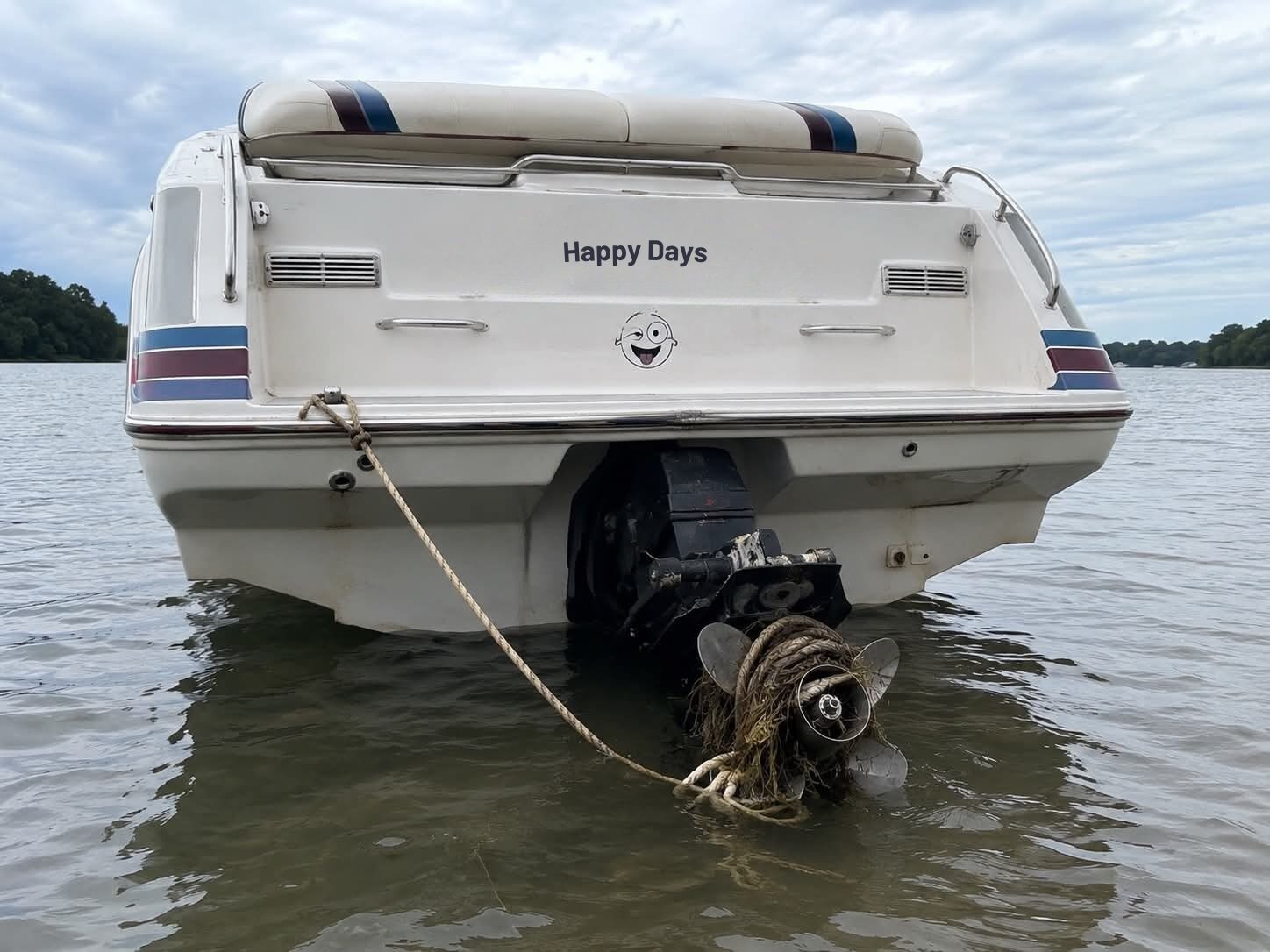
2. Rope Entanglement in the Propeller
Busy docks, loose lines, and eager boaters heading out for the first time in months — it’s a recipe for one of the messiest and most common early-season service calls we handle. A line in the prop happens fast, often before you even realise anything has gone wrong.
The culprits are usually dock lines not properly stowed, anchor lines left trailing near the stern, or lines from other boats in a congested area. In shallow, busy marinas at the start of the season, the risk is especially high.
Prevention tips:
- Coil and stow all dock lines before you move. This sounds obvious, but in the excitement of getting underway, lines get left draped over cleats or tossed onto the deck. Make it a habit: dock lines come off the dock, get properly coiled, and go into a locker or are properly secured before you touch the throttle.
- Secure your anchor line well away from the stern. A partially deployed anchor line trailing at the back of the boat is an invitation for trouble. Make sure it’s fully secured and that no loose line can reach the water.
- Assign a line check to crew. Before you leave the dock, have someone walk the perimeter and confirm there’s nothing hanging over the side. Make it part of your departure checklist.
If it happens anyway: Shut down the engine immediately and do not attempt to reverse out. Reversing when a line is wrapped around the prop almost always makes the situation worse — it winds the rope tighter and can cause damage to the shaft seal or cutlass bearing. The right call is to stop, assess, and get help.
Prop entanglement removal often requires someone to get in the water, and doing it without the right tools — or without experience — can result in injury. This is exactly the kind of situation where a C-Tow captain can help you get sorted safely, without turning a manageable problem into a much bigger one.
3. Groundings
Running aground is more common at the start of the season than most boaters expect, and for good reason: the water levels, sandbar locations, and underwater hazards that were familiar last fall may look very different in the spring. Seasonal water level changes, winter storms, and spring runoff can shift sandbars, deposit new debris, and alter the depth of areas you’ve navigated dozens of times before.
Add in the fact that many boaters are exploring new areas for the first time in the season — or pushing into territory they’re less familiar with — and groundings become a regular part of the spring call log.
Prevention tips:
- Check updated charts. Don’t rely on memory or old paper charts. Digital chart apps like Navionics and Wavve Boating update regularly and reflect known hazard changes. Before heading somewhere new (or somewhere you haven’t been in a while), take a look at the latest data.
- Slow down in unfamiliar water. Speed reduces your reaction time significantly. In areas you don’t know well, reduce to a comfortable idle and watch the depth sounder. If you don’t have a depth sounder, consider adding one — it’s one of the most practical pieces of kit on a boat.
- Understand how spring runoff affects depth. High spring water levels can actually hide hazards that are normally visible, like rocks just below the surface. Don’t assume high water means clear sailing.
- File a float plan. Tell someone where you’re going and when you expect to be back. This isn’t just good practice in case of a grounding — it’s a fundamental safety habit for any day on the water.
Get Out There with Confidence
None of these situations have to ruin your season. A little preparation goes a long way — and the boaters who do best on the water are the ones who take a few hours at the start of the season to check their systems, sort their lines, and review their charts before heading out.
At C-Tow, we’re proud to be out there alongside Canadian boaters for over 40 years. We’ve seen it all, and we’re always ready when you need us. But the best call is the one you never have to make.
A C-Tow membership means that if something does go sideways out there, you’re covered — 24/7, coast to coast, with a network of professional captains who know your waters. It’s not about expecting the worst. It’s about enjoying every moment on the water knowing you’ve got backup if you need it.
Here’s to a great season ahead.
C-Tow Marine Assistance has been protecting Canadian boaters since 1984. Learn more about membership and coverage at c-tow.ca.