 JOIN
JOIN MEMBERS
 C-TOW APP
 CAREERS
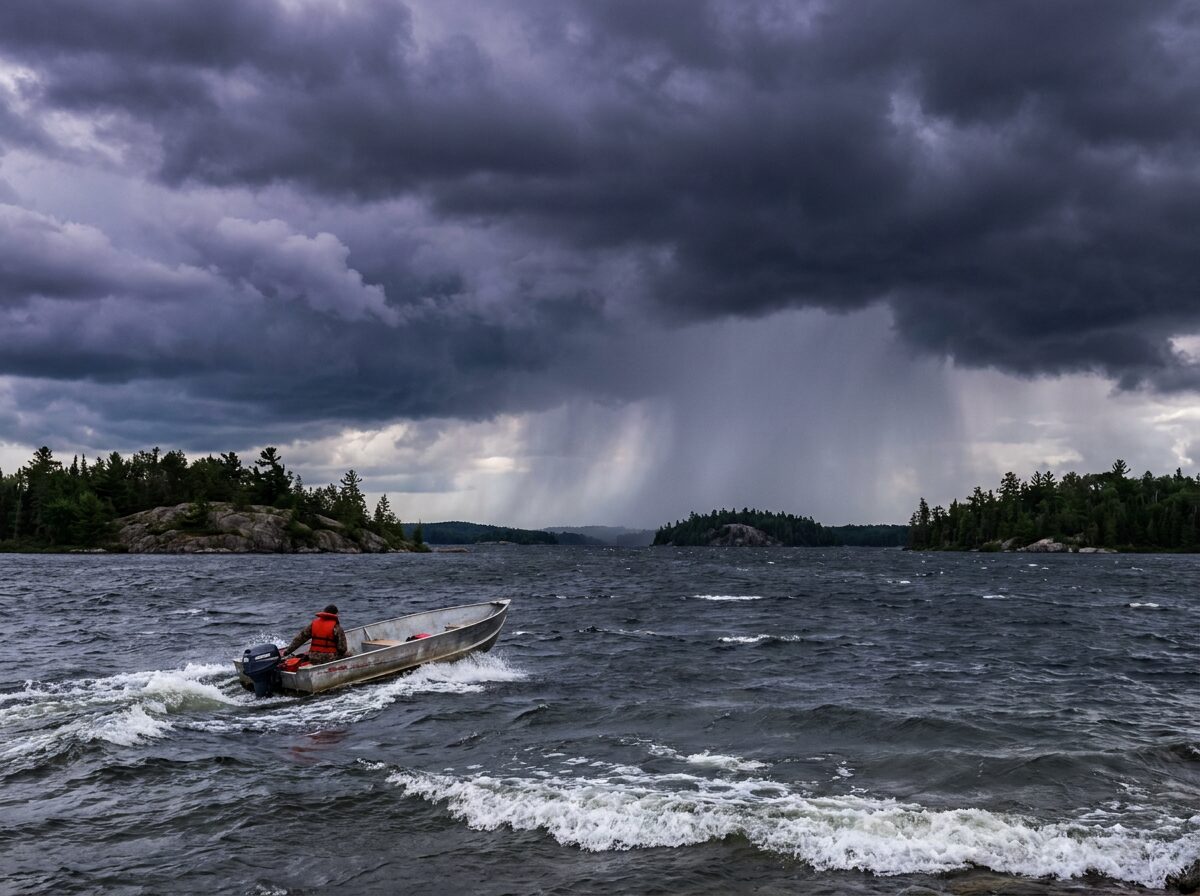
The forecast said “mainly sunny.” So why is that cloud bank rolling in from the northwest?
Every experienced boater has a version of this story. You left the dock in perfect conditions, spent a few hours on the water, and then turned around to see weather that wasn’t in the morning forecast building faster than you expected. Canadian summer weather — particularly on the Great Lakes, Georgian Bay, and the BC coast — can change with a speed that surprises even people who’ve been boating for decades.This isn’t a reason to stay ashore. It’s a reason to get better at reading what’s around you.
Why Canadian Waters Are Uniquely UnpredictableThe geography of boating in this country creates conditions that don’t exist in many other parts of the world. Georgian Bay is large enough to generate its own weather systems. Lake Superior behaves like a small inland sea, with waves that build quickly and hit hard. The BC coast combines Pacific swell with the compression effects of inlets and channels that funnel and amplify wind. Even relatively protected bodies of water like Lake Simcoe or the Rideau system can produce localized thunderstorms that outrun any forecast.
None of this is cause for panic. It is cause for preparation.
The 30-30 Rule and When It Applies
If you see lightning, count the seconds until you hear thunder. If it’s 30 seconds or less, the storm is within six miles and it’s time to get to shore or get low. After the last lightning strike, wait 30 minutes before returning to open water. This is known as the 30-30 rule, and it’s as reliable a guideline as boating safety has produced.
But waiting for lightning to make your decision is already too late. The smarter move is watching the sky in the hour before a storm arrives. Towering cumulus clouds with flattening tops — sometimes called anvil heads — are a serious warning sign. A sudden drop in temperature, a wind shift, or a rapid darkening in the northwest quadrant are all tells that conditions are deteriorating. If you notice any combination of these, point the bow toward shore.
Brief Someone Ashore Before You Leave
This is the simplest safety habit on the water and the most commonly skipped one. Before every trip, tell someone on land where you’re going, what route you’re taking, and when you expect to be back. If you have a float plan — even a rough one written on a piece of paper — leave it with a person who knows to make a call if you’re overdue.
This applies whether you’re doing a three-hour day trip or a week-long cruise. A VHF radio is not a substitute: communication on the water can be unreliable, and in an emergency, having a person ashore who knows to contact the Coast Guard is worth more than any piece of equipment on your boat.
The Gear That Actually Helps
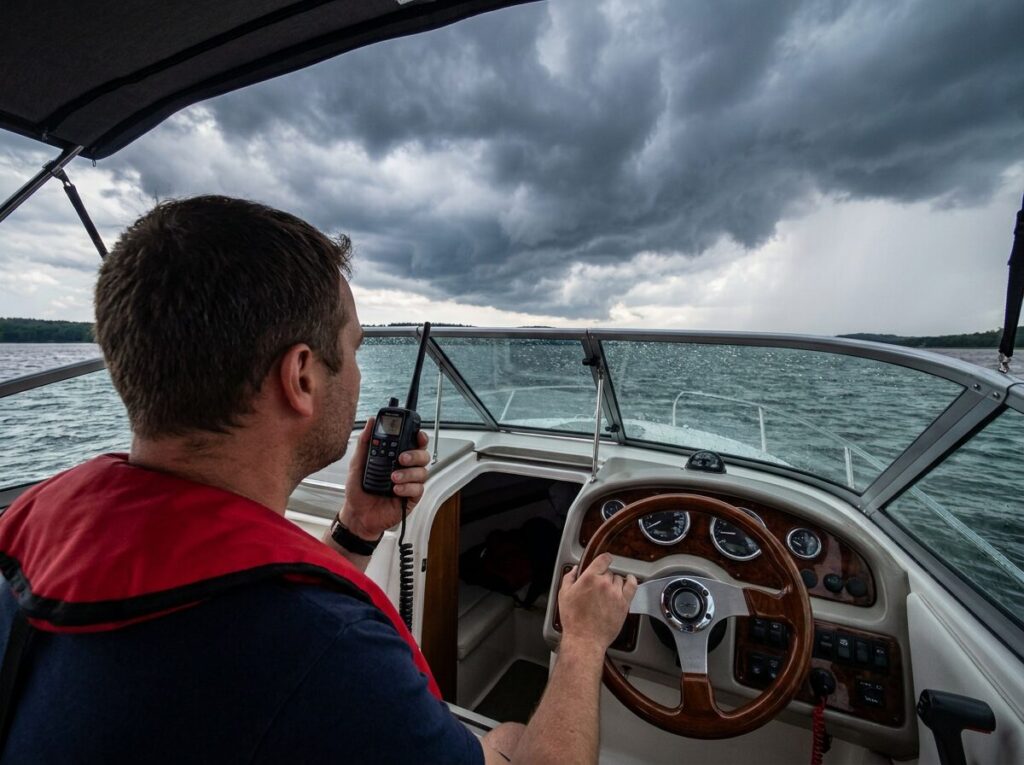
A handheld VHF radio with weather channels is non-negotiable on Canadian waters. Environment and Climate Change Canada broadcasts continuous marine weather on dedicated VHF channels — know your local frequencies before you leave. Many boaters also now carry satellite communicators, which work regardless of cellular coverage and can send an emergency signal anywhere in the world with one button. For under $30 per month, the peace of mind is hard to argue with.
The C-Tow app includes real-time marine weather and buoy data — a useful tool to have at your fingertips when you’re making that call between pushing on and turning back.
When in Doubt, Turn Around
There’s no destination worth a capsize, and no departure time worth a lightning strike. The water will be there tomorrow. Experienced boaters aren’t the ones who push through bad conditions — they’re the ones who’ve learned, usually the hard way, that the forecast is always an approximation and the lake is always in charge.
And if the weather catches you off guard anyway, that’s what C-Tow is for. Our captains operate in the same conditions you’re in, they know these waters, and they’re available at any hour. No one should feel like calling for help is a failure. Out on the water, knowing when to ask for assistance is one of the smarter things you can do.
Stay safe, stay informed, and enjoy every minute of a Canadian summer. When things go sideways, C-Tow is one call away — 1-888-419-2869, or open the app!