JOIN
JOIN MEMBERS
 C-TOW APP
 CAREERS
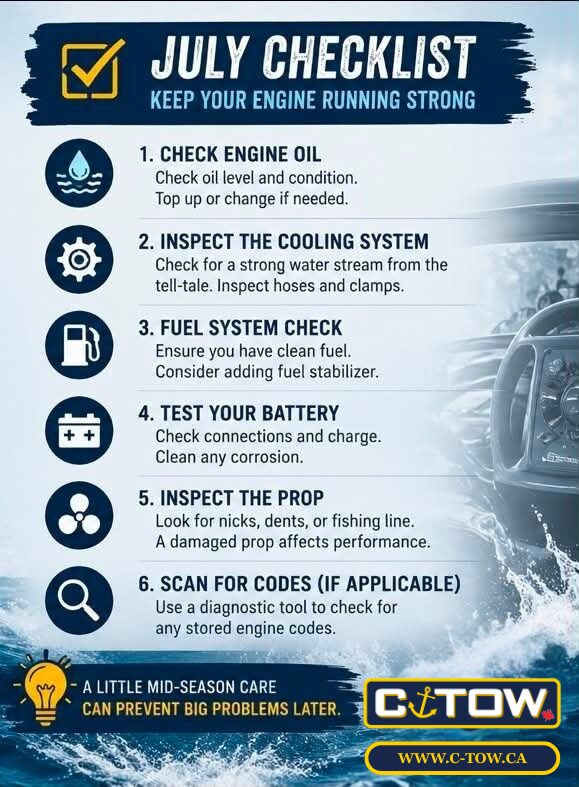
You’ve already put real hours on the engine this summer. Here’s how to make sure it keeps performing through the back half of the season.
By the time July rolls around, most recreational boaters have a solid 20 to 40 hours on their engines from spring launch weekends, early season shakedowns, and Canada Day runs. That’s exactly the point where small problems — if left unchecked — start turning into big ones. The good news is that mid-season maintenance doesn’t require a mechanic or a haul-out. A few focused checks performed at the dock can protect your engine and your summer plans.
Check Your Cooling System First
Overheating is the number one mid-season engine killer, and July is when water temperatures rise and engines work harder. Start by inspecting your raw water impeller — if you haven’t replaced it in the last two seasons, now is the time. A failed impeller can overheat your engine within minutes, and the damage can be expensive.
Check the water flow when you start the engine: a healthy outboard or sterndrive should produce a clear, steady stream from the tell-tale or cooling water indicator. If it’s reduced, intermittent, or absent, shut down immediately and investigate before you go any further. Also inspect hoses and clamps in your cooling circuit for cracks, swelling, or corrosion at the fittings. Heat cycles over a full season make these components wear faster than you might expect.
Inspect Your Fuel System
Summer heat accelerates fuel degradation, and ethanol-blended gasoline can absorb moisture over time — particularly in boats that sit between weekends. Check your fuel filter and water separator. If the separator bowl shows any milky discoloration or visible water, drain it before your next run. A clogged filter will starve the engine at exactly the wrong moment.
While you’re at it, inspect the fuel lines from the tank forward. Look for cracks, particularly near clamps and fittings where chafing is most common. A small fuel leak near an ignition source is not a situation you want to discover underway. This is a quick visual check that takes five minutes and could save your boat.
Look at Your Belts and Zincs
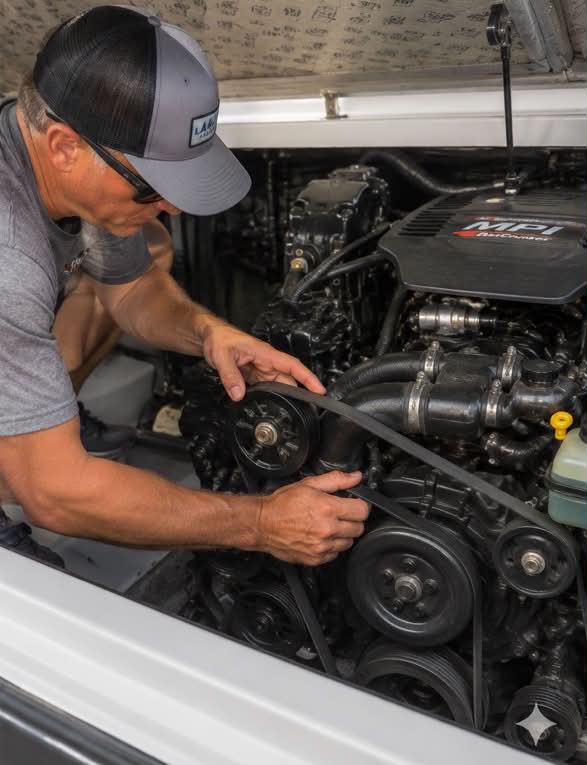
Serpentine and V-belts on inboard and sterndrive engines are often overlooked until they fail. Run your fingers along the underside of each belt — glazing, cracking, or fraying means replacement is overdue. A broken alternator belt leaves you running without charging power; a broken raw water pump belt means no cooling.
If you’re in salt or brackish water, check your sacrificial zincs. By mid-season they should be at least 50 percent intact — if they’re significantly worn or gone entirely, your drive components and through-hull fittings are now taking the corrosive hit instead. Fresh water boaters should still inspect their trim tabs and lower unit for any early signs of galvanic corrosion.
Review Your Battery Banks
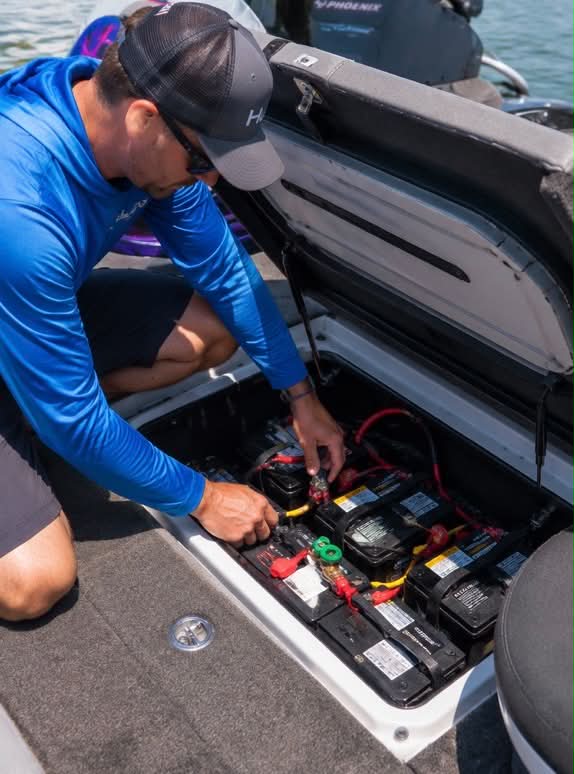
Heat is hard on marine batteries. Check the terminals for corrosion and clean them with a wire brush and baking soda solution if needed. Test your battery voltage with the engine off — a healthy 12V battery should read 12.6V or above when fully charged. If you’re seeing 12.0V or less at rest, the battery may be on its way out. The last thing you want is to be stranded at anchor with a dead starting battery at the end of a long weekend.
Trust Your Checklist — and Know Who to Call
Even well-maintained boats break down. Hoses fail, impellers give out without warning, and some problems only show themselves when you’re well away from the dock. A mid-season maintenance check reduces the likelihood of a call for help — but it doesn’t eliminate it.
That’s what C-Tow is here for. Our captains are on the water across British Columbia, Ontario, and Newfoundland, available around the clock. Think of your C-Tow membership as the last line of your maintenance plan — the one that handles whatever the checklist didn’t catch.
Check out this checklist and keep it close. And if something does go wrong out there, C-Tow has your back. 1-888-419-2869 or the C-Tow app!