JOIN
JOIN MEMBERS
 C-TOW APP
 CAREERS
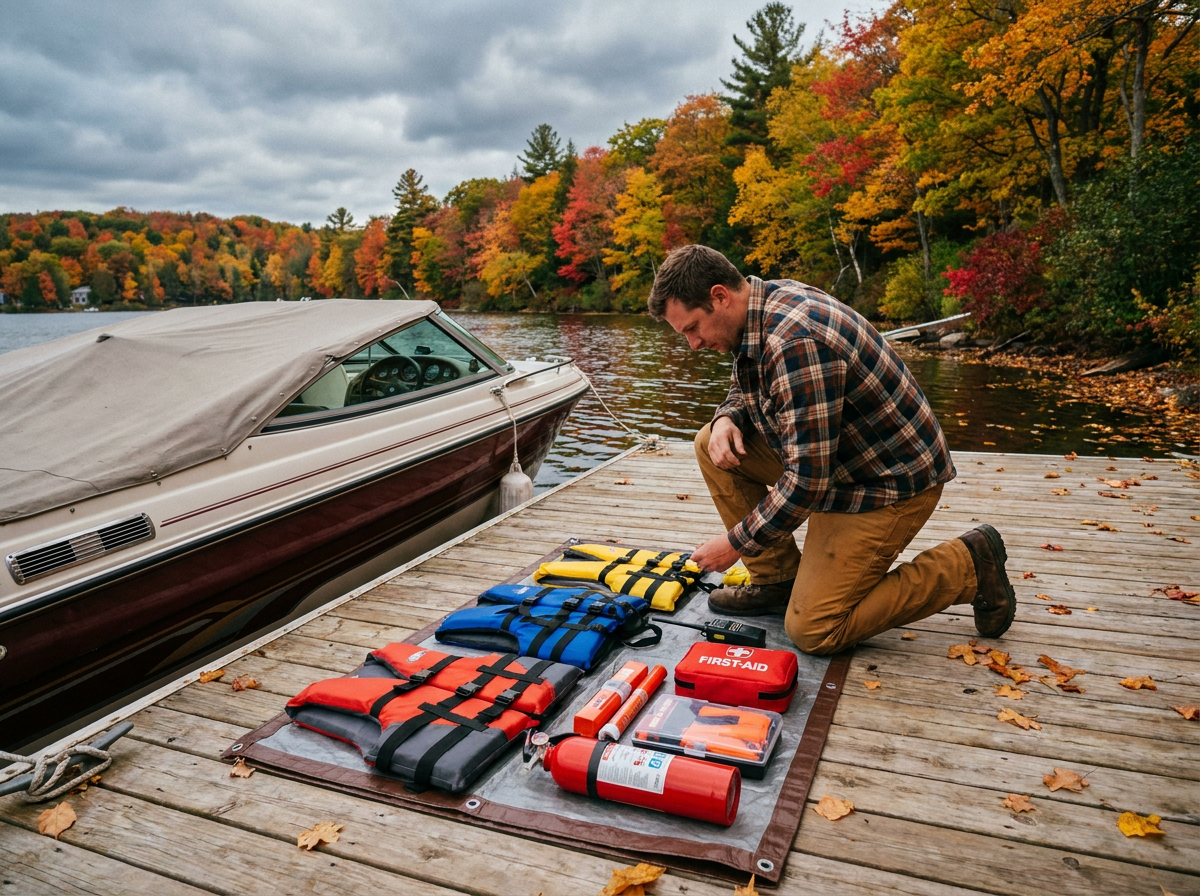
The weather has turned, the last long weekend is behind you, and somewhere in the back of your mind, the boat is already in storage. Mentally, you’ve closed the season. And that’s completely fair — you’ve earned it.
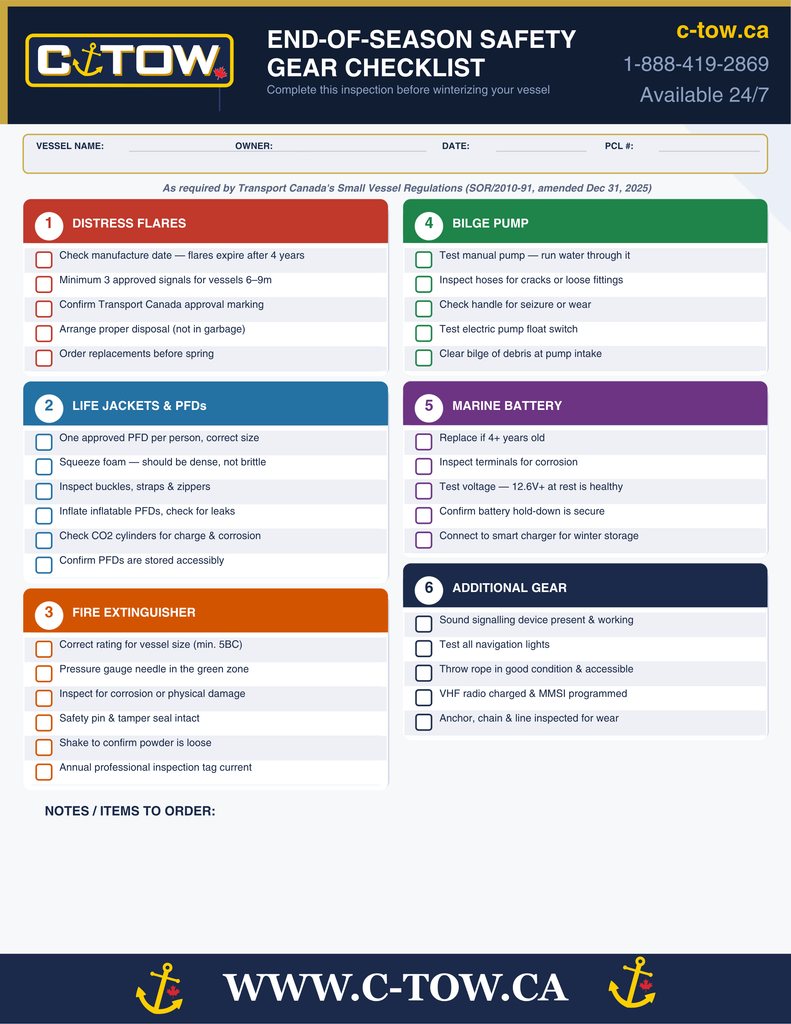
But before you pull the shrink wrap over the cockpit, there’s one task worth doing while the boat is still in the water and the gear is still aboard: a thorough inspection of your required safety equipment.
Here’s why the timing matters. Once the boat is on the hard and covered for winter, those life jackets get buried under tarps, those flares go out of sight, and you’ll be launching next May with whatever is in there — whether it still meets regulations or not. Doing this check now, while everything is accessible and there’s still time to replace what’s expired or worn out, means you’ll start 2027 with full peace of mind instead of a scramble on the dock.
Transport Canada’s Small Vessel Regulations — last amended December 31, 2025 — are the law on Canadian waters. Here’s what the regulations require and what to look for on each item.
Flares — Check the Date First
This is the most time-sensitive item on the list. Transport Canada approves distress flares for exactly four years from the manufacture date. Flares made in 2022 or earlier expired this season. Expired ones do not count toward your legal requirement.
Check each flare canister for the manufacture year stamped on the body. Approved types for most recreational vessels include hand-held red flares, parachute rocket flares, and buoyant smoke signals. For most boats between 6 and 9 metres you need at least three approved distress signals.
Important: expired flares cannot go in the garbage. The propellant and pyrotechnic materials are hazardous waste. Many boating clubs, marinas, and organizations like CanBoat run annual flare disposal days — check with your local marina this fall.
PFDs and Life Jackets — Look Beyond the Label
You need one Canadian-approved PFD or life jacket for every person on board, in the right size. But the regulations also require that the equipment be serviceable — a life jacket with cracked foam, broken buckles, torn webbing, or compromised buoyancy doesn’t count, even if it’s the right size.
Go through each one. Inflate any inflatable PFDs manually to check for leaks and inspect the CO2 cylinder for proper charge. Squeeze the foam in non-inflatable jackets — it should feel dense and resilient, not brittle or compressed. Check straps, zippers, and buckles for wear. If it wouldn’t hold someone securely in the water, it needs to be replaced.
Fire Extinguisher — The Gauge Is Not the Whole Picture
Boats with a motor, a fuel-burning appliance, or an enclosed cabin are required to carry a fire extinguisher. The regulations specify a minimum 5BC rating for smaller boats, scaling up by vessel size.
Checking the pressure gauge is a start, but not the whole picture. Look for corrosion on the body and head, confirm the seal and safety pin are intact, and shake it to confirm the dry chemical inside hasn’t compacted. Marine fire extinguishers should be inspected annually by a certified professional. If yours hasn’t been tagged in the last twelve months or the needle has drifted into the red, replace it before next season.
Bilge Pump — Test It, Don’t Assume It
A manual bilge pump is required on vessels up to 9 metres. The test is simple: pour water into the bilge and verify the pump moves water effectively and that hose connections are secure. Look for cracked hoses, seized handles, and worn seals. If you have an automatic electric bilge pump, check that the float switch triggers correctly. Fall is the right time to find out it’s seized — not spring.
Battery — The Case for Replacing Now
A battery failure mid-season can disable your VHF radio, navigation lights, bilge pump, and starting circuit all at once. Most marine batteries have a reliable service life of three to five years. If yours is pushing that range, fall is the right time to replace it — prices are often better, your dealer has inventory, and you’ll launch next season with a full charge and genuine confidence.
Non-Compliance Is Not a Minor Issue
Fines for missing or non-compliant life jackets start at $200 per infraction. Carrying expired flares, an uninspected extinguisher, or no bilge pump can each trigger additional penalties. This checklist is about legal compliance, not just best practice.
Two Layers of the Same Safety Plan
At C-Tow, we respond to boaters in distress every day throughout the season, from BC to Newfoundland. The call we always hope to answer is the one from a member who has proper safety gear and a C-Tow membership — two layers of protection working together. The gear is what keeps everyone safe in the minutes after something goes wrong. The membership is what gets help there.
So close out the season right. Spend an afternoon with your checklist, replace what needs replacing, and order before stock gets thin in spring. You’ll thank yourself when the first nice weekend in May rolls around and you’re ready to go.