 JOIN
 MEMBERS
 C-TOW APP
 CAREERS

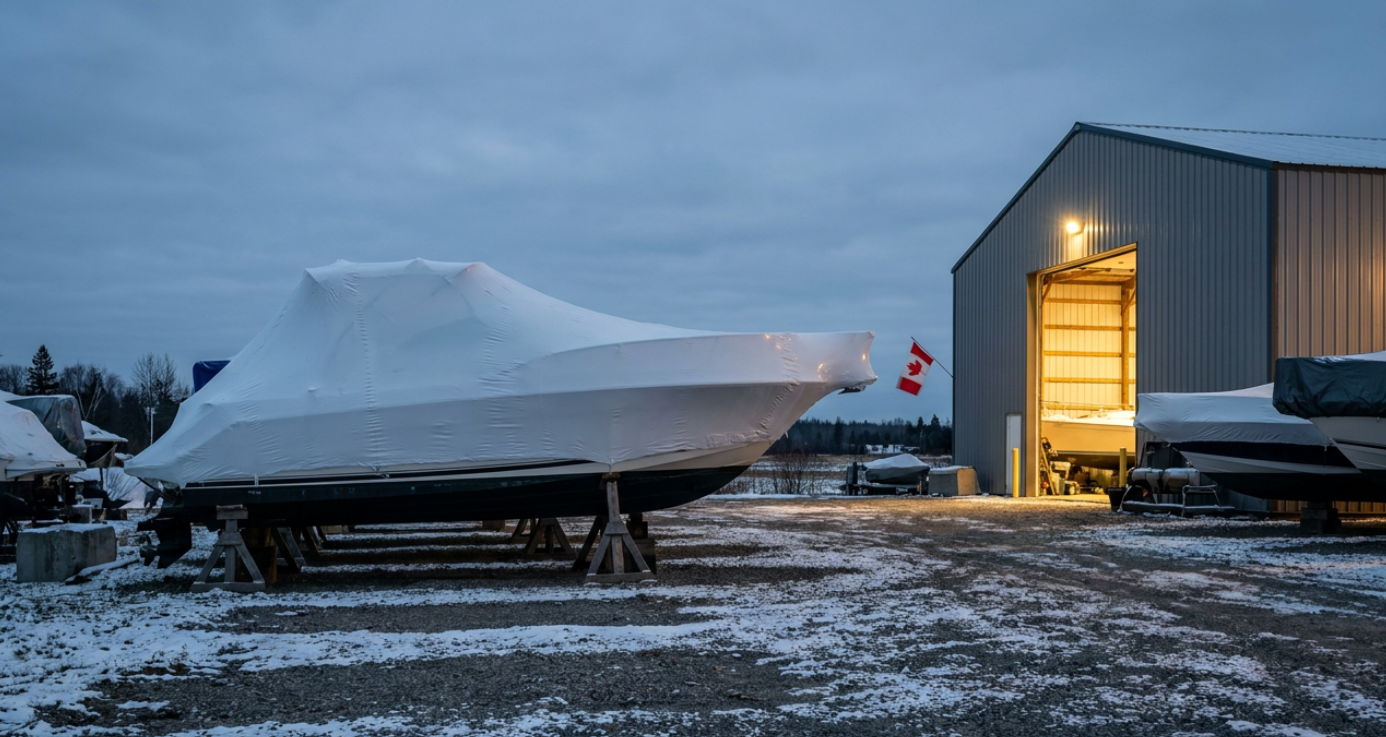
Every fall, boaters face the same question once the last haul-out is done: where does the boat actually spend the winter? There’s no single right answer. The best choice depends on your boat, your budget and how much hands-on work you want to do. Here’s a simple way to think it through.
Option 1: Outdoor storage with a cover or shrink wrap
This is the most common choice, and for good reason.
- Shrink wrap forms a tight, sealed shell around the boat. Many owners like it because it sheds snow and keeps the weather out.
- A fitted cover on a frame can be reused year to year and is easier to open up for a mid-winter check.
- Ask about airflow. A boat wrapped up with no ventilation can trap moisture, so make sure whoever does the job leaves vents.
Option 2: Indoor storage
A heated or unheated building keeps your boat out of the snow, wind and sun altogether. Space is often limited and usually costs more, so book early. It’s worth asking your marina or storage provider what they offer and when they fill up.
Option 3: Storing at home
Keeping the boat in your own driveway or yard puts you in charge, and lets you pop out for a look any time. Check your local rules and make sure the trailer and supports are stable.
Questions to ask before you decide
- What does my insurance require for winter storage?
- How is the boat supported, and who is responsible if something shifts?
- Can I get in to check on it over the winter?
- What’s included in the price, and what’s extra?
A winter habit worth building
Whichever route you choose, plan to visit your boat once or twice before spring. A quick walk-around can catch a loose cover or an unexpected leak before it becomes a bigger job.
Winter is also a great time to line up your spring list. Browse parts and maintenance supplies at store.c-tow.ca (members save 20%), and check your membership renewal date so you’re covered from the first launch.