 JOIN
JOIN MEMBERS
 C-TOW APP
 CAREERS
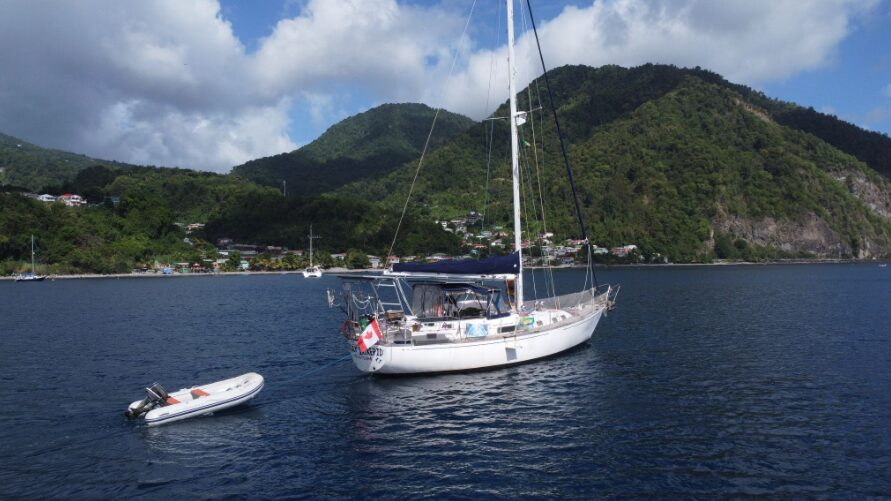
“Off-grid” has become a popular buzzword both on land and on water. As a cruiser it is the dream you hope for, being self-sufficient on many levels; producing your own power, making your own water, carrying your own home, and solving your own problems—often hundreds of miles from help.
Every sailboat is essentially a tiny floating off-grid home where we need to carry and have all the systems necessary to function away from civilization. This isn’t really required when you live in a marina but as you start sailing to different anchorages you quickly realize that you need to produce your own power to turn on your anchor light so that other boats see you for example. We quickly realized that our very first night away from the dock, with no solar panel and old batteries we had no power overnight and had to hoist a solar light up the mast. Over the last 8 years of owning a sailboat and sailing from the Great Lakes in Canada to the Caribbean we have learned what is needed to be Off-Grid. These few key elements are required to be completely off-grid
Making Your Own Electricity
There are many ways to make your own electricity; solar panels, wind generators, engine alternators and even generators to name a few. You need something to store all that energy so many sailors are using either lithium batteries these days but lead-acid, AGM, and gel batteries are still around of course. Which option you chose is personal and also depends on what your budget is or what’s available.
One upgrade that dramatically improved our off-grid capabilities was switching from lead-acid (or gel) batteries to lithium. Unlike traditional batteries, where only about half of the rated capacity can be used without shortening their lifespan, lithium batteries allow you to safely use most of their stored energy. They also accept a much faster charge, meaning less engine run time and more efficient use of solar power—giving you more luxury while enjoying life at anchor.
Most boats have an alternator which charges your batteries from the engine but you can only produce power when motoring. If you are like us and enjoy spending many days at anchor without moving then solar panels will make sense, sort of free power after the initial investment. Plus solar panels have gone down in prices drastically. There are rigid and semi-flexible panels which both have pros and cons. We did notice that semi-flexible panels tend to last less time before their output drastically diminishes.
When the clouds and rain roll in for many days in a row that is when a generator comes in handy. They do require fuel but it puts less hours and wear and tear than having to run your engine at idle only to charge your batteries.
Alternatively you could install wind generators but we have found them very noisy even when anchored near someone who has one and you need the right amount of wind for them to produce power. Not to mention the maintenance involved due to all the moving parts and outdoor electronics. It can be nice to have the extra electricity when sailing overnight or during stormy days. However in general our solar has done the trick, especially with our recent upgrades.
Water Doesn’t Come From the Tap
This is probably the hardest thing to understand when coming from landlife where water is pretty much unlimited. Long showers, turning on the tap and not closing it right away when washing hands or brushing your teeth. On a boat this is a very different world where water is everything and every drop matters. Especially if you need to lug it from shore. Whatever you carry in your tanks is what you have to work with. We cruised for five years, always planning our stops according to the amount of time we could last on 50 gallons and finding where we could fill back up our tanks. We became professionals at conserving water, doing showers in the rain and collecting rain water.
If you have the money, buying a water maker is a true game changer, it allows you to be off-grid for much longer. It means freedom! Being able to convert salt water into fresh water was a great upgrade which allowed us to visit remote islands in the Bahamas that we never considered before.
Food and Provisioning
I used to buy food for only a few weeks at a time at most. Now I find myself often provisioning for over a month and sometimes even months when sailing to the Bahamas where options are limited and food is very expensive.
Provisioning requires a lot of planning and slowly figuring out what your needs and food preferences are. Which with a 3 and 4 year old onboard it always changes.
Fresh produce only lasts so long, especially with limited refrigeration space. The addition of a small freezer helped us carry meat and fish for much longer. It is also all about figuring out which produce will last long enough out of the fridge or what actually needs to go in the fridge. Mustard and many sauces do fine on the shelf.
Being your own Hardware Store
One of the biggest realities of off-grid cruising is that there is always something broken. There is a reason why so many sailors joke about the fact that cruising is just fixing your boat in exotic places.
You become your own:
- Electrician
- Plumber
- Mechanic
- Carpenter
- Seamstress
Sometimes all in one afternoon. This also means that you have to carry so many spares onboard to be able to fix what breaks when visiting smaller places. We’ve been stuck waiting for almost a week because we needed a $10 oil ring for our engine’s water pump just because we didn’t carry it. So make a list of the most likely things that tend to break, or what is needed for regular maintenance and get them. Unfortunately we can’t carry everything because it would take too much space and cost just too much. But some items like a VHF antenna, or solar charge controller can make a difference if you get struck by lightning with no means of communication or charging your batteries. Yes, this happened to us and having just a small charge controller got us up and running in a few minutes.
Being Off-Grid might sound a little intimidating at first because lets be honest there is a lot to learn. Luckily nowadays with the internet and Starlink it makes all this much more accessible. Help isn’t always around the corner but there are so many great resources online and forums. Just be careful about which sources your information comes from. AI or Facebook groups can sometimes cause more harm than good without fact checking.
This life has so many benefits and allows you to travel in the comfort of your own home. It also forces you to learn so many practical skills and spend more time teaching those to your kids. Being independent and living life at a slower pace is what we were looking for. Even with the challenges! Every system aboard your boat depends on your planning, maintenance, and problem-solving skills. While the lifestyle demands preparation and resilience, it rewards you with a unique sense of freedom that few other ways of life can offer. Finding yourself anchored in the middle of nowhere, fully self-sufficient, snorkeling amongst spectacular reefs and having showered before eating a 5-Star meal with a good glass of wine is FREEDOM.
Anne Alexandra Fortin
Cory and Alex share their adventure with weekly videos on their YouTube channel “Wildly Intrepid Sailing”. Their dream is to travel the world and to live without any regrets.