 JOIN
JOIN MEMBERS
 C-TOW APP
 CAREERS
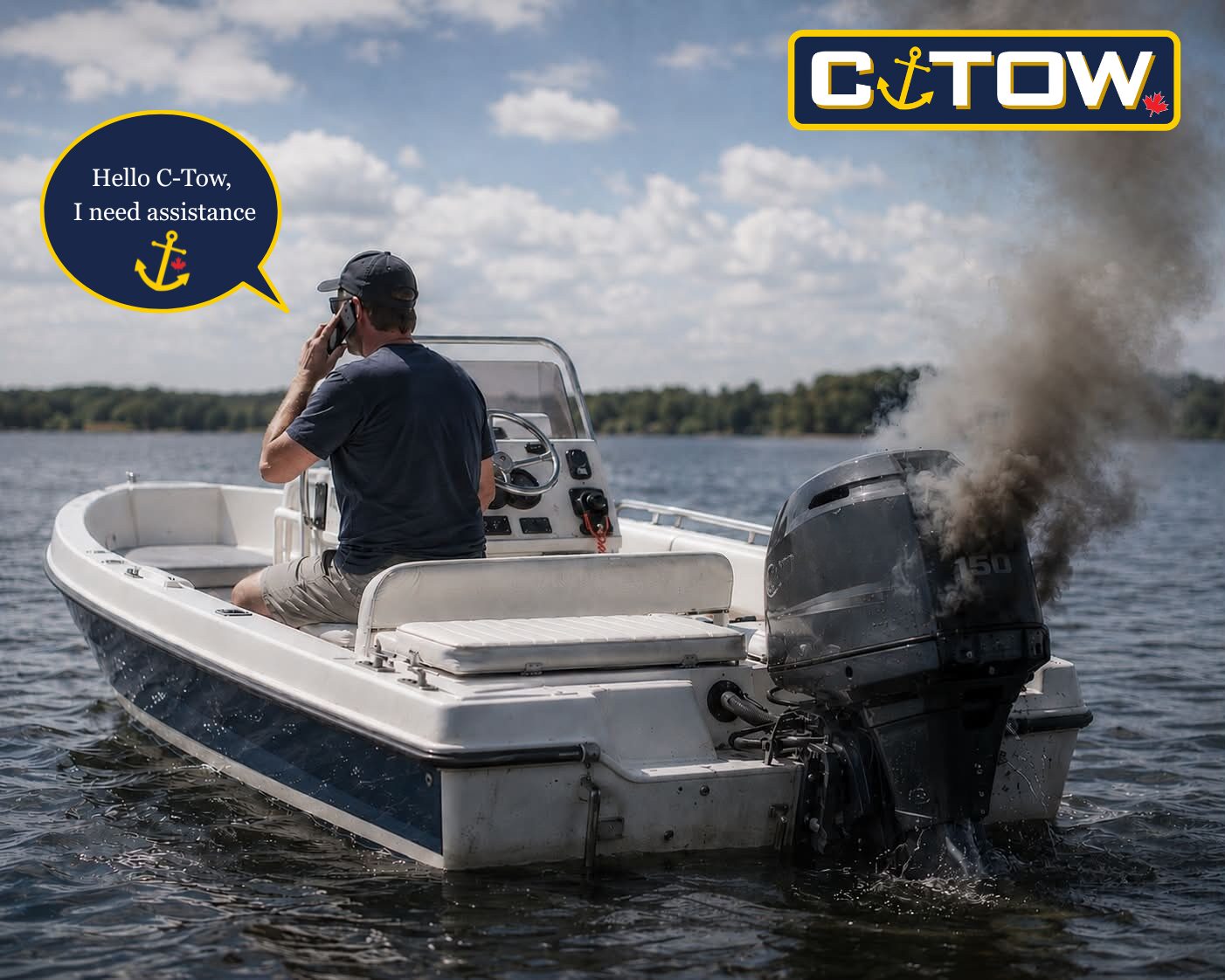
There’s nothing quite like a day on the water — until your engine decides it’s done for the afternoon. The good news? Most engine problems don’t appear out of nowhere. They leave clues. Knowing what to look, listen, and sniff for can mean the difference between a minor inconvenience and a costly rescue.
Here’s what every boater should know before leaving the dock.
1. Your Temperature Gauge Is Creeping Up
What to watch for: The needle climbing toward the red zone, or your engine’s temperature warning light flickering to life.
Overheating is one of the most common — and damaging — engine issues on the water. It’s often caused by a clogged water intake, a failed impeller, or low coolant. If your gauge is rising, throttle back immediately and check the tell-tale (the small stream of water that should be flowing out of your engine). No flow? Shut it down before you cause serious damage.
2. Strange Smells You Shouldn’t Ignore
What to watch for: The sharp scent of fuel, a sweet antifreeze odour, or the acrid smell of burning rubber or electrical insulation.
Your nose is one of your best diagnostic tools. A fuel smell could indicate a leak in the fuel line or a carburettor issue. A burning rubber or electrical odour often points to an overheating belt or wiring problem. Never dismiss an unusual smell — investigate before you go further.
3. Exhaust Colour Changes
What to watch for: Blue or grey smoke, black smoke, or white smoke coming from your exhaust.
Your exhaust tells a story:
- Blue or grey smoke usually means you’re burning oil — a sign of worn piston rings or valve seals.
- Black smoke often points to a rich fuel mixture or a dirty air filter.
- White smoke could indicate water in the combustion chamber — a serious issue that needs immediate attention.
A little white vapour on a cold morning is normal. Sustained or heavy smoke is not.
4. Unfamiliar Vibration
What to watch for: Excessive shaking through the hull, helm, or throttle that wasn’t there before.
Vibration is almost never random. It often signals a damaged or fouled propeller, worn engine mounts, or a shaft alignment issue. Even hitting a submerged log at low speed can bend a prop enough to cause a noticeable vibration. If something feels “off” underfoot, head back to the dock and get it checked.
5. Hard Starting or Rough Running
What to watch for: The engine cranks but won’t catch, stalls shortly after starting, or runs with an uneven, lumpy idle.
Hard starting can point to fuel delivery issues, fouled spark plugs, or a weak battery. Rough running at idle often suggests a fuel system problem or dirty injectors. If your engine sounds hesitant or uneven, don’t push it — these issues tend to get worse under load.
6. Unexplained Power Loss
What to watch for: The throttle isn’t responding the way it used to — you’re not getting the speed or RPMs you expect.
A gradual or sudden loss of power can mean anything from a partially blocked fuel filter to a slipping transmission. It can also be a fouled prop or a ventilating impeller. Whatever the cause, a motor that isn’t performing at full capacity is one that may not get you home.
7. Warning Lights — Don’t Ignore Them
What to watch for: Any illuminated warning light on your instrument panel.
It sounds obvious, but you’d be surprised how many boaters push through a warning light hoping it’ll sort itself out. Your gauges and warning systems exist for a reason. Oil pressure, battery charge, and engine temperature lights are your early warning system — treat them that way.
The Pre-Departure Habit That Saves the Day
Before every trip, spend five minutes with your engine. Check oil and coolant levels, inspect belts and hoses for cracks or wear, test your battery, and listen to how she starts. Most problems reveal themselves long before they become emergencies — if you’re paying attention.
And even the most diligent boater can get caught out. Equipment fails. Conditions change. That’s why Canada’s most experienced mariners trust C-Tow.
With over 40 years on the water, the largest towing fleet in Canada, and 24/7 coast-to-coast coverage, we’re always just a call away. A C-Tow membership means you’re never truly stranded. Learn more at c-tow.ca.