 JOIN
JOIN MEMBERS
 C-TOW APP
 CAREERS
Sailing offers an incredible sense of freedom which is why we fell in love with it 8 years ago, but it also demands preparation. When you leave the protection of the harbor or marina, you are responsible for your own safety and the safety of everyone on board, especially when you have little crew members like us (2 & 4). Good seamanship isn’t just about sailing skills or navigation—it’s about making sure the boat is equipped to handle emergencies if they arise.
Safety equipment is something many sailors install and then forget about, assuming it will work when needed. But like every system on a boat, it needs regular inspection and maintenance, because things have that funny tendency to break. Before any trip, it’s worth taking the time to check that everything is in good working order.
Here are some of the most important pieces of safety equipment every sailboat should inspect before leaving the dock.
Fire Extinguishers
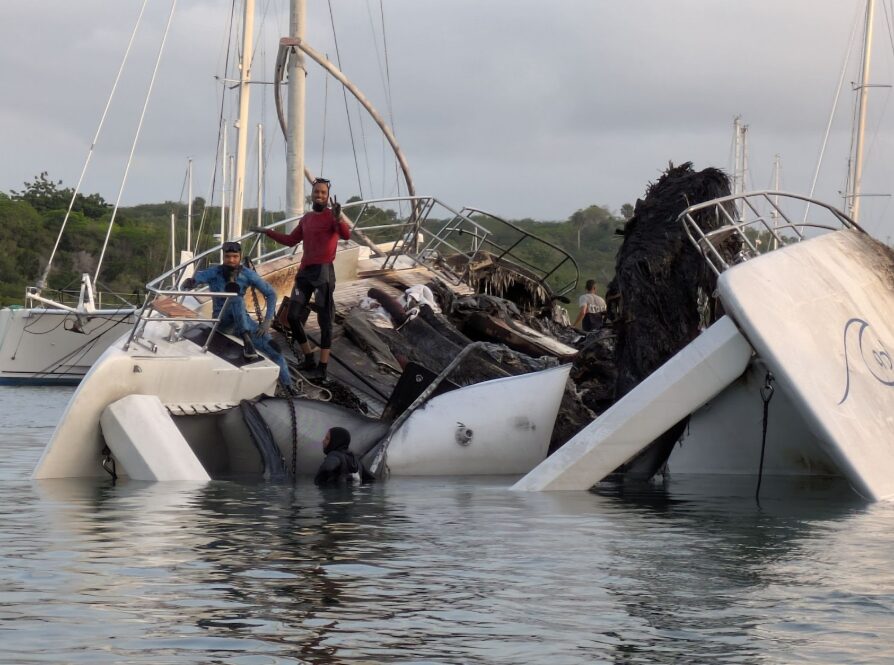
Fire is one of the most dangerous emergencies on a boat. In a confined space surrounded by fuel systems, electrical wiring, and combustible materials everywhere, a small fire can escalate very quickly. We have seen this first hand when this summer a catamaran went up in flames after being struck by lightning. There were no working fire extinguishers on the dock.
Every sailboat should carry several fire extinguishers placed in accessible locations around the boat. Typically, there should be one in the galley, one near the engine compartment, and another in the main cabin area.
When inspecting your extinguishers, check that the pressure gauge is in the green zone and that the safety pin is intact. Look for any signs of corrosion or damage on the canister. Extinguishers should also be mounted securely so they are easy to grab during an emergency but won’t become dangerous projectiles if the boat rolls. Every month or so take them off the mount and rotate them. This prevents the powder from caking up on the bottom. Sometimes fire extinguishers are recalled for various reasons so do some research to see if yours is on the recall list.
Life Raft
A life raft is one of the most important pieces of safety equipment for offshore sailors. In the unlikely event that the boat must be abandoned, the life raft becomes your survival platform.
Life rafts require periodic servicing according to the manufacturer’s schedule, usually every few years. During a pre-departure inspection, check that the raft is securely mounted in a location where it can be deployed quickly. These are really heavy so having them close to the water is great. The painter line should be properly attached, and nothing should block access to the raft.
It’s also worth reviewing the deployment procedure with everyone on board. In a real emergency, knowing exactly how the raft releases and inflates can make a huge difference.
Life Jackets
Life jackets are essential safety gear, but they are only effective if they are worn and in good condition. Every person on board should have a properly fitting life jacket that is easy to access. We usually bring ours up in the cockpit with us prior to a sail just in case
If you use inflatable life jackets, check the condition of the fabric, the inflation cartridge, and the automatic triggering mechanism. Many inflatable jackets include inspection windows that show whether the cartridge and mechanism are armed.
It’s also wise to make sure each life jacket includes a whistle and reflective material to improve visibility. And we also have a water activated light on our kids’ lifejackets to help us locate them.
EPIRB
An Emergency Position Indicating Radio Beacon, or EPIRB, is one of the most powerful rescue tools available to sailors. When activated, it transmits a distress signal via satellite along with the vessel’s position, allowing search and rescue authorities to locate you.
Before heading offshore, check that the EPIRB’s registration information is current and that the battery has not expired. Most EPIRBs have a test function that allows you to confirm the unit is operating without sending a real distress signal.
Flares
Visual distress signals are another critical safety tool. Flares help rescuers locate a vessel when they are already nearby but cannot easily see it.
Check the expiration dates on all flares before leaving. Marine flares typically expire after several years, and outdated flares should be replaced. We keep the expired ones for backup but don’t rely on them.
Air Horn
An air horn may seem simple, but it plays an important role in signaling. It can be used to alert nearby vessels in poor visibility, signal danger, or attract attention during an emergency.
Before departure, test the air horn briefly to ensure it is working. If it uses a compressed air canister, confirm the canister is not empty and that the horn produces a loud, clear signal. Sometimes a small rust spot can cause the compressed air to release, making your horn useless.
Sound signals are particularly important during fog or crowded harbor situations and we have even needed to use ours to signal a bridge tender in the Erie Canal.
Navigation Lights
Navigation lights are essential for avoiding collisions at night or during low visibility. They allow other vessels to identify your boat’s direction and movement.
Check that all navigation lights—bow lights, stern light, masthead light, and anchor light—are functioning properly. Burned-out bulbs or corroded connections are common issues on boats exposed to saltwater.
Turn the lights on before leaving to confirm that they are working.
Bilge Pump
A functioning bilge pump is critical for keeping the boat afloat if water begins entering the hull. This was especially helpful when our hot water tank decided to empty itself due to a faulty pressure relief valve. Every sailboat should have at least one electric bilge pump and ideally a manual pump as well.
Test the electric pump by activating the float switch or turning the pump on manually. Confirm that water is being discharged overboard and that the hose connections are secure.
Manual pumps should also be tested to ensure they operate smoothly.
VHF Radio
The VHF radio is the primary communication tool for sailors. It allows you to contact nearby vessels, marinas, and coast guard authorities if assistance is needed.
Before departure, turn on the radio and check that it powers up properly. Perform a radio check with a marina or another vessel to confirm the transmission and reception are clear.
Also carry a handheld because if you lose your mast your antenna will be underwater and not transmitting your Pan Pan or MAYDAY.
Preparation Brings Peace of Mind
Safety equipment is something sailors hope they never have to use, but when an emergency occurs, these systems must work properly.Taking the time to inspect and maintain these systems can make a critical difference.
A thorough safety check before leaving provides peace of mind and ensures that if something unexpected happens offshore, the crew and vessel are prepared to respond. It makes us feel safer sailing with our family through the Caribbean.
Anne Alexandra Fortin
Cory and Alex share their adventure with weekly videos on their YouTube channel “Wildly Intrepid Sailing”. Their dream is to travel the world and to live without any regrets.