 JOIN
JOIN MEMBERS
 C-TOW APP
 CAREERS
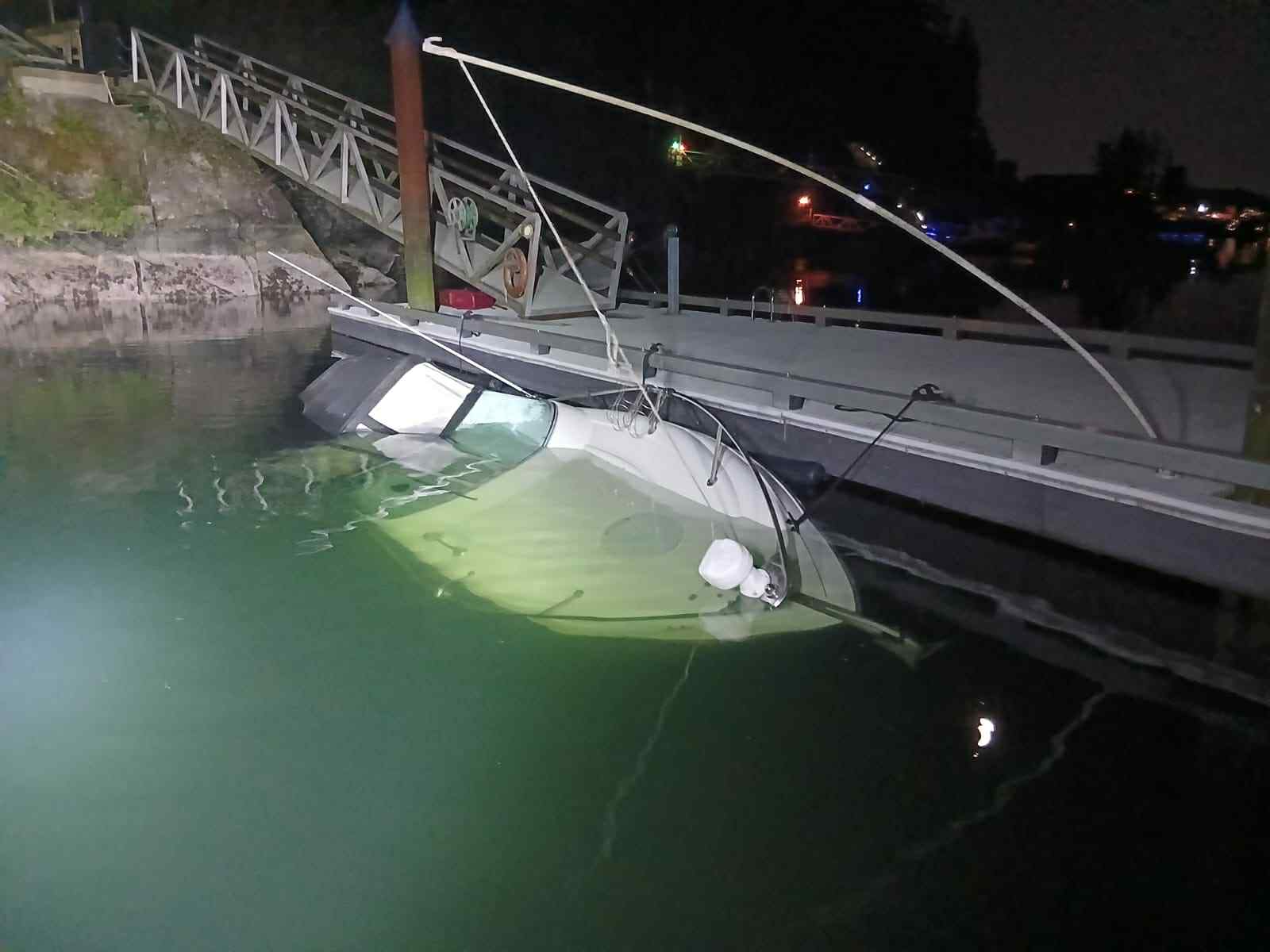
In the past few weeks I’ve seen a number of sad social media posts at Canadian marinas where vessel’s have sunk. One in particular appeared to be a live-aboard: the power had gone out at the marina over the weekend, and a stuck float switch on a bilge pump caused it to run all night, running the battery down. The battery wasn’t being re-charged by shore power. A small trickle of water that was usually taken care of by a working bilge pump soon became a big problem; the boat took on water and submerged. The owner returned from a weekend away to find his home in Davy Jones’ locker. While this scenario is a perfect storm of bad luck, it makes me think that whether your boat is currently afloat or ashore: spring is around the corner and bilge pumps are always your first and last line of defence against water intrusion.
Water has an uncanny ability to find its way into a boat. It can enter through through-hulls, stuffing boxes, deck hatches, windows, portholes, or small leaks. No matter where it comes from, gravity ensures it eventually collects at the lowest point beneath the floorboards — the bilge. A bilge pump is installed in this area to remove excess water and discharge it overboard. Bilge pumps fall into two main categories: manual and electric.
Manual Bilge Pumps
Manual pumps rely entirely on human effort. Some are permanently mounted, often in the cockpit or galley, and operated by hand or foot. Others are portable units that require the operator to place the intake hose into the bilge water and run a discharge hose overboard. In both cases, the operator must physically pump the water out. Manual pumps are essential as a backup system and provide reliability when electrical systems fail.
Electric Bilge Pumps
Most modern sailboats and powerboats are equipped with electric bilge pumps. These are mounted in the lowest part of the bilge, where water naturally collects. Electric pumps can be activated in two ways:
• By switch — manually turned on and off.
• By float switch — automatically activated as water rises. A float switch works like an automatic electrical trigger. As the water level rises, the float rises with it. At a preset height, the float activates the pump. Once the water is expelled and the level drops, the float lowers and switches the pump off. For maximum control, electric bilge pumps are ideally connected to a three-position switch:
1. Off – prevents operation and conserves battery power.
2. On – allows manual pumping.
3. Auto/Float – enables automatic operation via the float switch.
A Typical Bilge Pump Setup
A well-equipped boat often includes multiple pumps for redundancy and specific purposes:
1) Primary Electric Pump (on Float Switch) Installed where water naturally collects:
• On a sailboat: typically centered above the keel bolts.
• On a powerboat: usually toward the stern beneath the engines.
2) Secondary Electric Pump (Engine Space)
Mounted in the engine compartment and operated by a simple on/off switch (not automatic). This is especially important on sailboats. It allows controlled pumping while preventing oily or contaminated water from being discharged automatically.
3) Manual Cockpit Pump A fixed manual pump with a pickup hose located in the lowest part of the bilge, operated from the cockpit. This provides emergency capability without electrical power.
4) Auxiliary Hand Pump An additional portable manual pump — just in case. Redundancy is critical when it comes to managing water intrusion.
What Size Bilge Pump Do You Need?
The most common question regarding bilge pumps is: “What size do I need?” Pump capacity is measured in GPH (Gallons Per Hour) — the volume of water the pump can move in one hour under ideal conditions. Many pumps also list a “head” rating, which refers to the vertical distance the pump can lift water — from the bilge to the discharge point through the hull. The greater the head, the more pump efficiency decreases.
Factors to Consider
There is no one-size-fits-all answer. Consider:
• Type of boating (coastal cruising, offshore passage, inland lakes)
• Risk of collision
• Hull material (steel, wood, fiberglass)
• Vessel age and condition
• Number and size of through-hulls
• Water tank size and condition
• Vessel displacement
Real-World Flow Examples
To understand pump sizing, consider this:
• A 1-inch hole located 12 inches below the waterline can allow approximately 717 gallons per hour into your boat. → You would need at least a 750 GPH pump just to match the inflow.
• A 2-inch hole at the same depth can allow roughly 2,910 gallons per hour into your boat. → You would need a 3,000 GPH pump to keep up. As hole size or water depth increases, water intrusion rises dramatically.
The practical takeaway?
Bigger is generally better.
Keep in mind that real-world performance is always less than the rated GPH due to hose length, bends, wiring voltage drop, and head height.
Bilge Pump Maintenance Tips
Proper care ensures your pump works when you need it most.
1) Keep the Bilge Clean and Dry A clean bilge makes it easier to monitor water intrusion. Use absorbent pads to capture oil, fuel, or grease and prevent contaminants from being pumped overboard.
2) Remove Debris Small items like wire clippings, zip ties, screws, and dirt can jam the pump impeller. This can stop the pump, cause overheating, or even create a fire hazard.
3) Winterize the System Before freezing temperatures:
• Drain pumps and hoses completely.
• Run marine antifreeze through the system to prevent freeze damage.
4) Avoid Running Dry Bilge pumps rely on water for cooling and lubrication. Running dry for more than about 20 seconds can cause overheating and damage.
5) Test Regularly Periodically lift the float switch manually to confirm activation. Check:
• That the pump turns on and off properly
• That water is actually being discharged overboard
• That hoses and connections are secure and leak-free
Final Thoughts
Bilge pumps are not simply convenience equipment — they are critical safety systems. While there is no absolute rule for sizing and installation, careful planning, redundancy, and regular maintenance are essential. When it comes to bilge protection, sound judgment and common sense should always prevail — and when in doubt, err on the side of greater capacity and backup systems.